Science and Research at the Museum of Prague
What do we do at the museum to support scientific and research activities?

We do a lot.
From traditional methods in history and archaeology to the use of the latest technologies in digitization and AI.
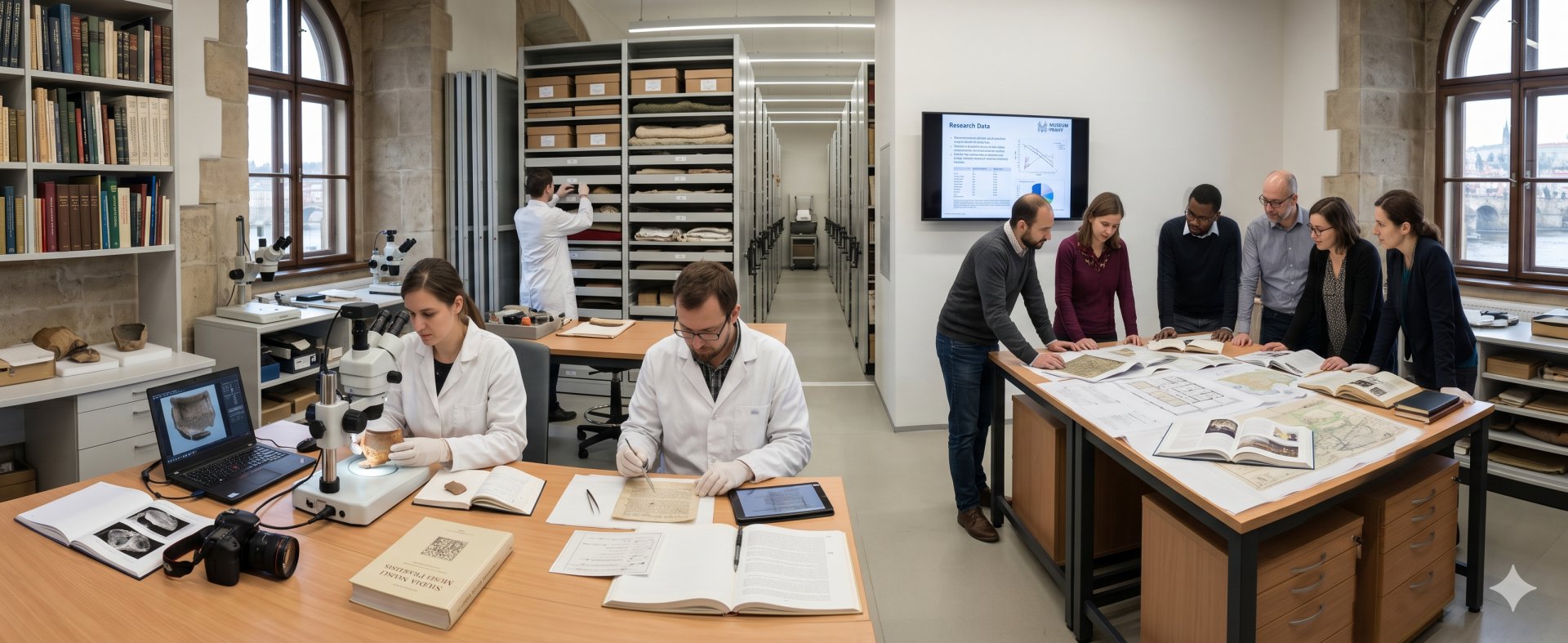
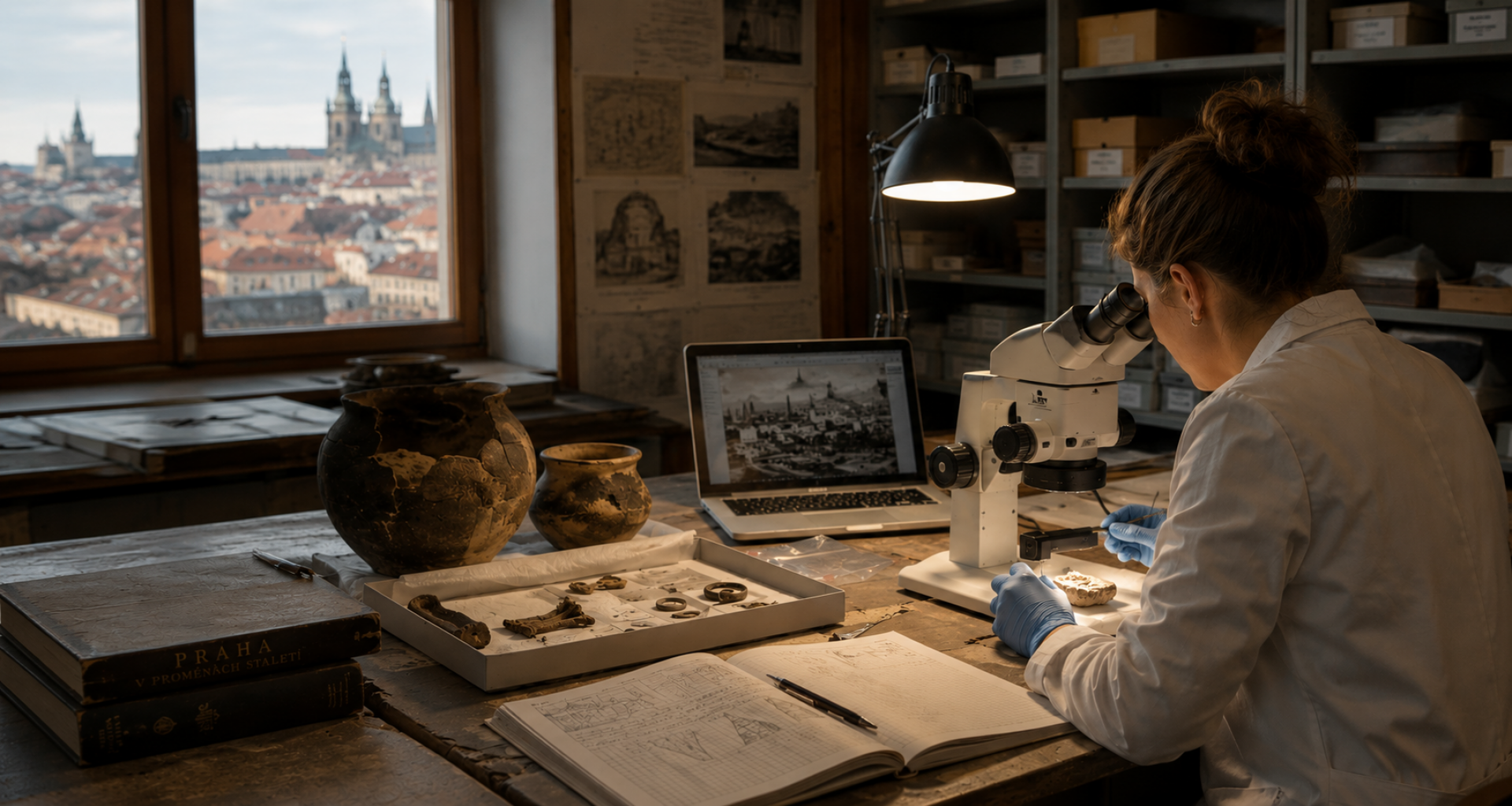
As of August 21, 2018, the Museum of Prague has been registered on the list of research organizations. It conducts independent basic and applied research and publicly shares the results of its expert work by publishing activities, presentations at workshops and conferences, and organizing lectures and other educational activities. As a regionally focused museum, it primarily engages in interdisciplinary research in the context of Prague’s history. In the field of science and research, the Museum of Prague focuses primarily on the expert processing of collection items and the examining of the social, cultural, political, and economic phenomena to which these artifacts refer. To this end, it uses the knowledge and methods of history and archaeology, analytical approaches to collection conservation, and, not least, the latest digitalization and AI tools. In 2025, documentation and research focusing on nature in the Prague metropolitan area were added to the list of the Museum of Prague’s expert and educational activities. This new direction allows for a better understanding of the relationship between the urban environment and the natural processes taking place inside it.
The development of science and research at the museum is also linked to the ongoing support and expanding range of grant applications (GA ČR, OP JAK, TAČR, and Erasmus+ programmes).
We believe in lifelong learning
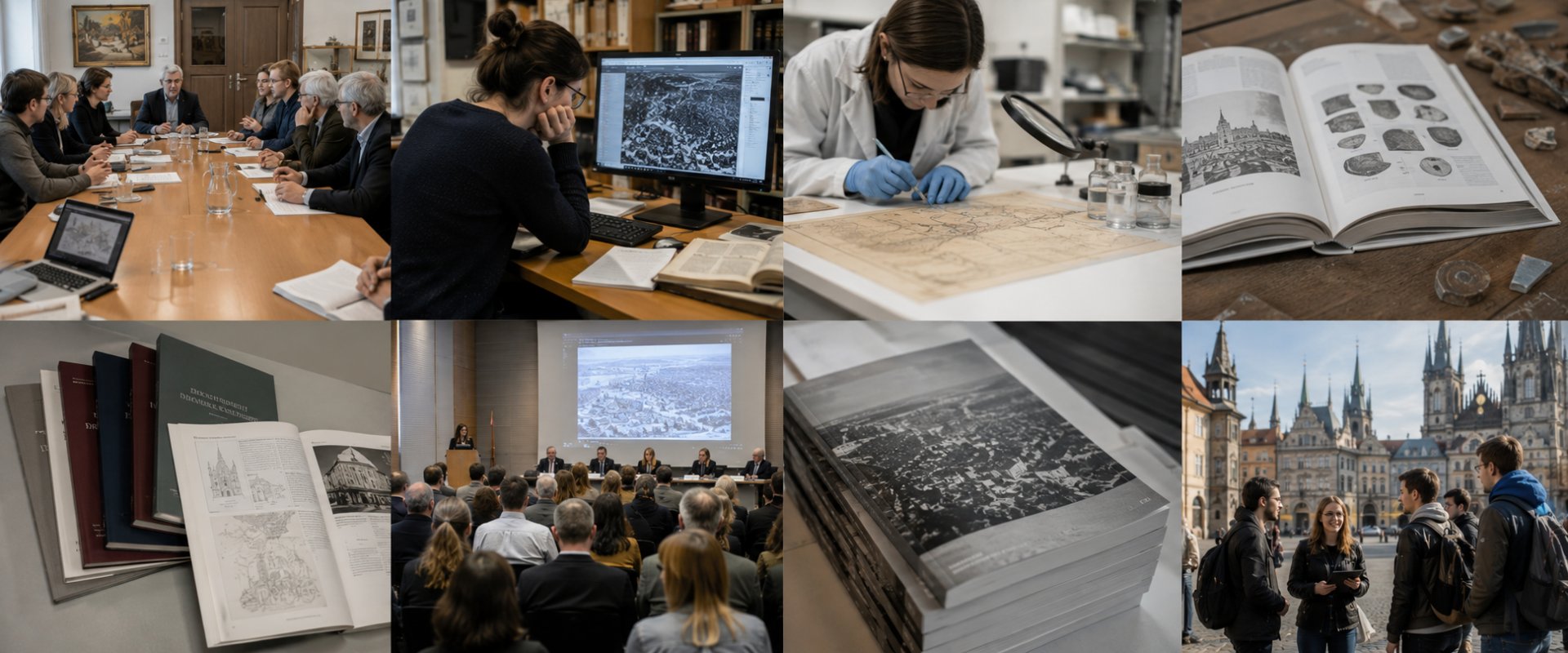
Support for continuing education is closely linked to science and research in the museum environment. Museum staff are continuously encouraged by their supervisors to take professional courses and training, as well as to pursue doctoral programmes in fields relevant to the specialized activities of the Museum of Prague. Currently, the museum has eleven employees with Ph.D. degrees (in Archaeology, History and Art History, and Computer Science), six of whom earned their degrees between 2019 and 2025. Another five employees are pursuing doctoral degrees (in Archaeology, Art History, Auxiliary Historical Sciences, and Conservation Sciences) and are expected to graduate shortly.
We can reach even the most inaccessible places
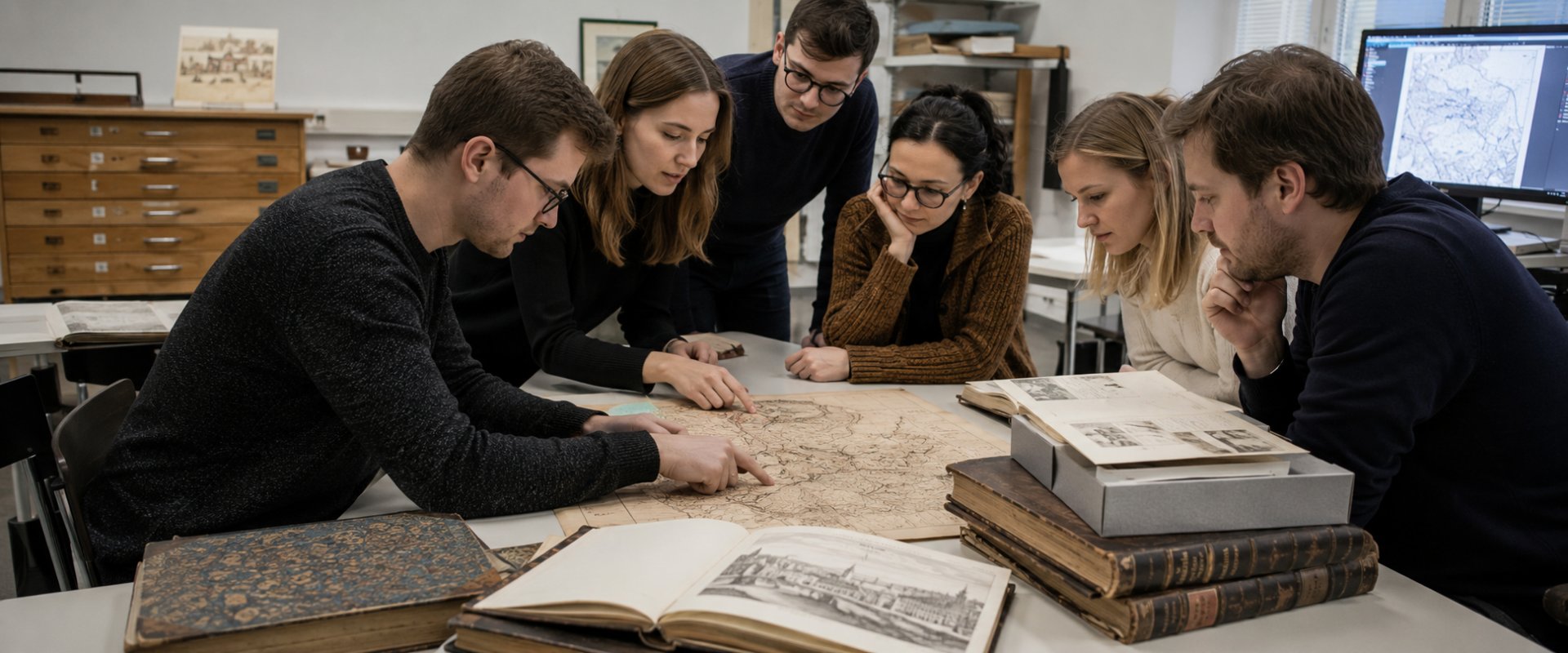
In 2025, the Museum of Prague became an identity provider within the eduID federation. As a result, museum staff and users of the museum library gained access to domestic and international databases, repositories, and other information resources that require eduID authentication. This autumn, an agreement was signed with the National Library of the Czech Republic to provide access to the Kramerius database and the DNNT collection (Works Unavailable on the Market).