AI Fair Play: How Artificial Intelligence (doesn't) Works

The Museum of Prague, in collaboration with ČVUT FEL, presents an educational methodology that explains the core principles of modern AI and chatbots in a clear, interactive way.

What is a neural network and why does AI sometimes "hallucinate"?

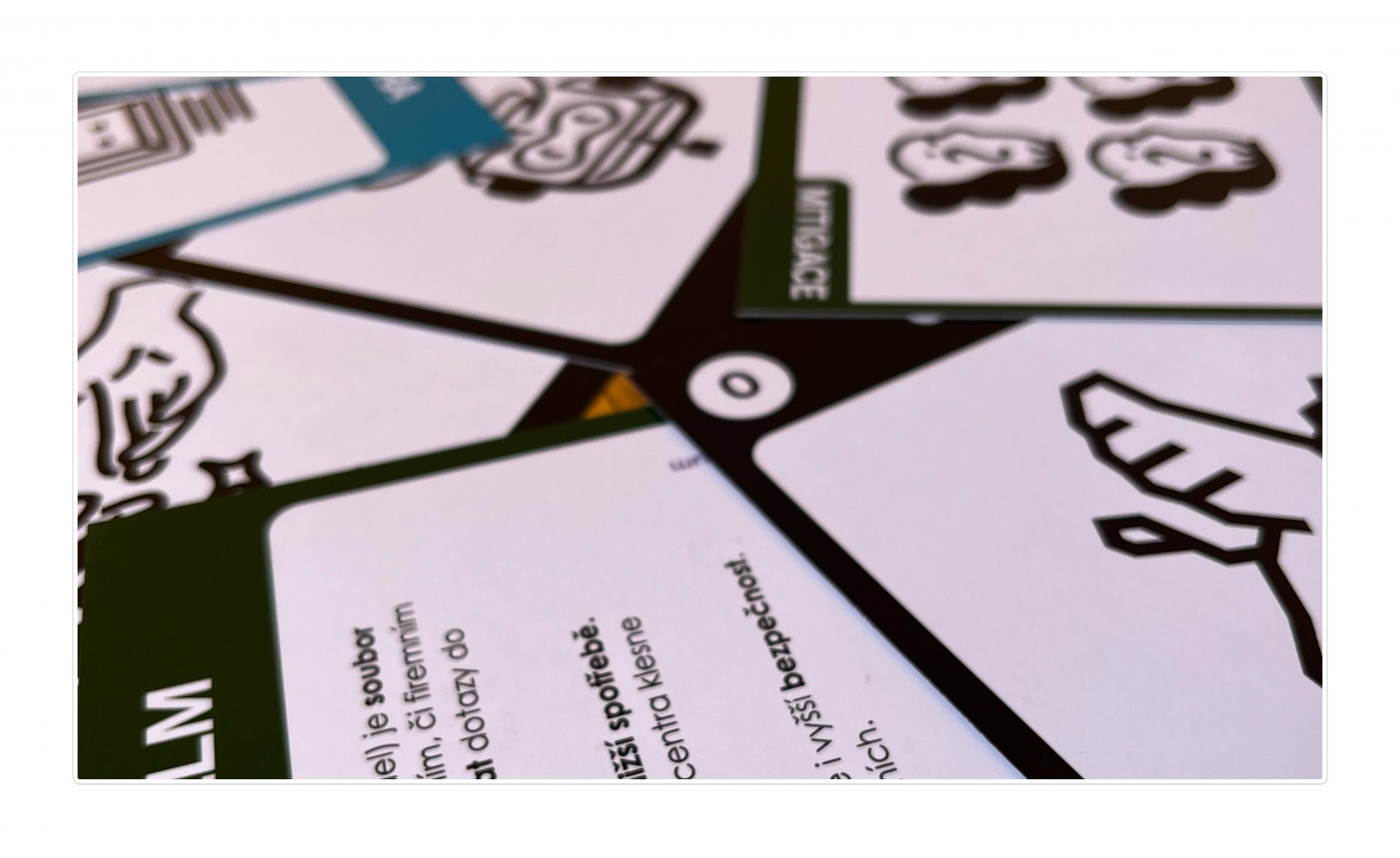
These questions are answered by AI Fair Play, a new educational game. The set includes 24 cards covering key technical concepts, complemented by a 27-page methodology guide and instructor's handbook with the option to complete our certified training programme.

The methodology draws on the educational framework developed at the University of Geneva, adapted specifically for the cultural sector. Real-world testing has shown that the card format works equally well for complete beginners and undergraduate computer science students. The cards explain technical concepts in a straightforward, example driven way. The workshop is designed primarily for professionals in the cultural sector and creative industries.

The card set covers the full journey from foundational AI literacy to specific risks and how to navigate them. The language is deliberately accessible rather than technical, aiming for clarity above all. The cards are organised into five thematic rounds:

The opening round sparks discussion by asking participants where they have already encountered AI in their daily lives from translation tools and maps to Canva and voice assistants. Early on, participants learn a key distinction: AI is not the same as a chatbot. This round requires no prior knowledge; instead, it builds on what everyone already knows from everyday life.
Four cards reveal what is really happening inside the model. The embedding card explains that AI does not understand words the way humans do. Each word is converted into a set of numbers that describe its relationship to other words in the language. The neural network card shows how these numerical representations pass through layers of computation inspired by the workings of the human brain. An LLM (Large Language Model) is a large neural network specialised in language. The training card closes the cycle.
This set follows the journey of a single query from the moment the user hits Enter to the moment a response appears, revealing how many layers even this seemingly simple action involves. The user interface is the entry point. The prompt is the input itself and its quality directly shapes the quality of the output. A token is the smallest unit of text the model processes, and each model can only handle a limited number of tokens at once, known as the context window. The cards on chips, processors, and data centres then remind participants that AI is not just software: behind every query stand powerful GPU and TPU chips housed in vast buildings somewhere in the world, consuming electricity around the clock.
In this round, explanation naturally transitions into discussion. Participants now have enough knowledge to place risks in context and engage with concepts such as hallucination, data poisoning, misuse of personal data, and the problem of autonomous agents. The environmental impact card closes the round with a reminder that growing demand for AI has real physical consequences: energy and water consumption comparable to that of entire countries.
The final set pairs each risk with a concrete response and is led primarily as a group discussion. By this point, participants are familiar with the concepts and begin drawing their own connections. The cards in this set cover: data validation and sandboxing, RAG (retrieval-augmented generation), anonymisation, local LLMs, and model optimisation. Renewable energy sources then close the full arc of the game with the thought that the future of AI need not mean larger models and higher consumption but a smarter, more sustainable approach to the technology.