

What you can experience
A Trade is a Goldmine when it's in Order
To protect their interests while maintaining the quality and price of their products, craftsmen began establishing guilds around the 13th century, which were known in our part of the world as "pořádky"(orders).
Order Must Prevail
The establishment of trade guilds had a practical reason. Simply put, it was a system of market regulation that—among other rules—for example, prevented high prices and the import of low-quality, cheap goods, determined the method of training trade apprentices, and, last but not least, functioned (even back then) as social security for widows, orphans, or sick masters. So it was truly a sensible way to maintain order. And that is precisely why, in modern times, they were called "orders" in our country.
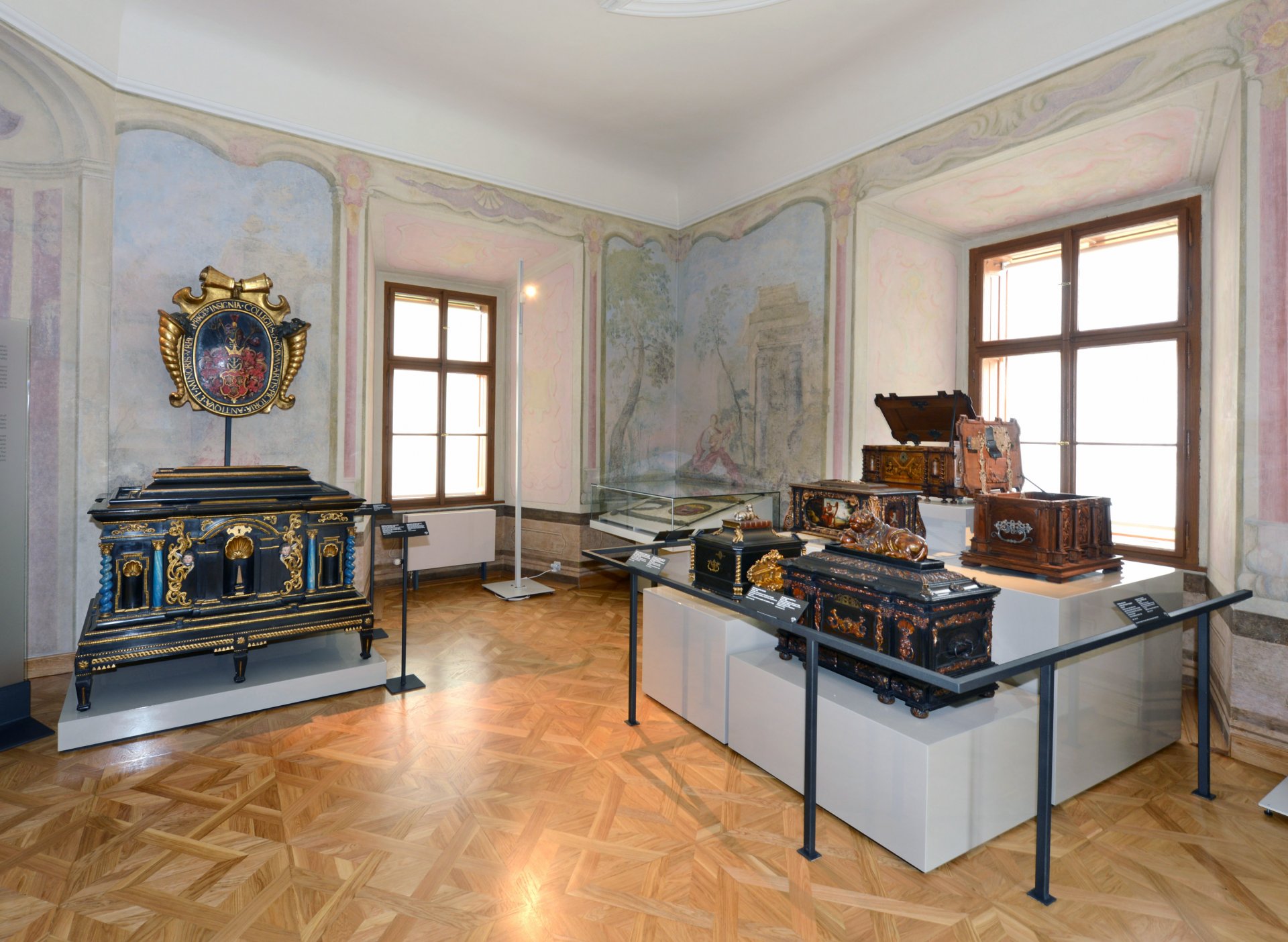
Each guild owned items without which it could not exist and of which it was duly proud, just as a sports fan today is proud of their team's merchandise. These were mainly guild emblems, usually banners or decorated sticks, which were displayed on ceremonial occasions. Then there were more practical items. For example, guild chests, in which important documents, records of membership contributions, fines, and other valuables were kept.
The Museum of Prague manages one of the most extensive collections of guild artifacts in the world! At the castle in Ctěnice, you have a unique opportunity to glimpse into the world of craftsmen and their guilds from the Middle Ages to the present day. Many of the items have never been exhibited before and had to undergo extensive conservation and restoration work.